


Private: separation fleece TV110 GRK2 110g/m²
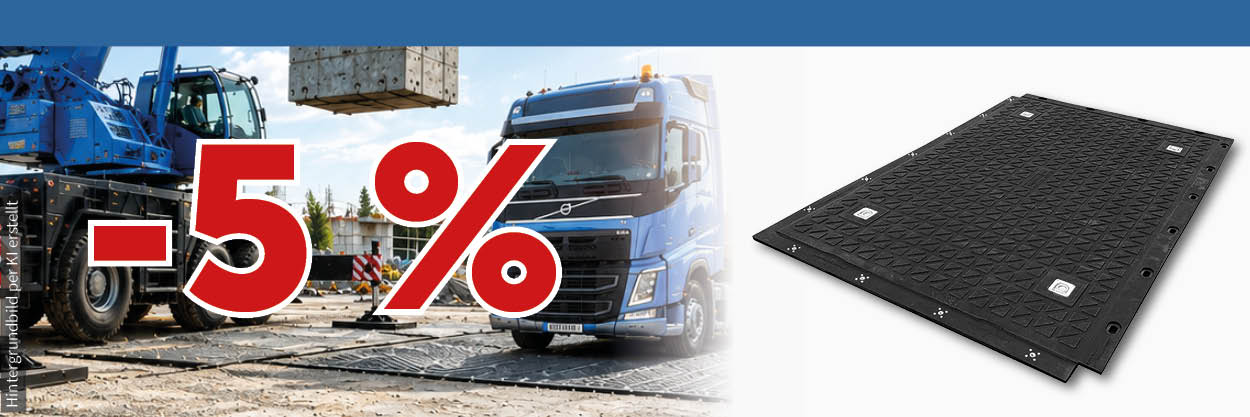
Save in November 5% when you buy our products with up to 200 t load capacity MegaTrack PRO heavy-duty road plate with fully integrated connection technology and load-distributing overlapping lips.
At the beginning of the photo series, you can see what the paddock looked like before. It was flooded with water, mud, and sludge. The ground was unpaved, very deep, and slippery. To remedy this situation, the TV110 Separation Fleece was first laid on the floor in the stable and on the paddock. The Separation Fleece, as the name suggests, serves to separate two soil layers (topsoil and subsoil).
The BG50 ground grids were then laid on top of the fleece in the paddock. The connectors on the outer sides of the grid allow the panels to be easily and quickly connected to form paths and surfaces.
After the ground grids were all connected and installed, they were then filled with sand. We recommend overfilling the ground grids for two reasons. First, the sand settles due to rain, moisture, its own weight, and stress. Second, the horse's hooves should never stand directly on the ground grid, but rather on a layer of sand.
This is significantly more comfortable for the horse, and the bars are protected from direct contact and UV radiation, both of which have a positive effect on the longevity of the extremely robust and flexible bars. It is recommended to order a little more sand, especially in the initial phase, so that you have the opportunity to add sand to areas where the floor bars are exposed.
After this minimal construction without replacing the floor, the paddock is immediately ready for use and can be used again by horse and rider.


